

A well-planned train station is one of the best investments a community can make as it seeks to expand its appeal as a place for tourism and business investment and also cultivate civic pride.
A train station often paints the first impression of a town or city for visitors coming for a long stay or simply passing through. It can be a transportation hub for commuters, a place for the community to gather and an opportunity to spur economic growth and activity. Train stations allow a community the chance to embrace its past while focusing on the future. Stations have always been hubs of civic activity and social centers where family and friends reconnect. Investing in your train station or building a new one can bring jobs, revenue and new attractions to your town.
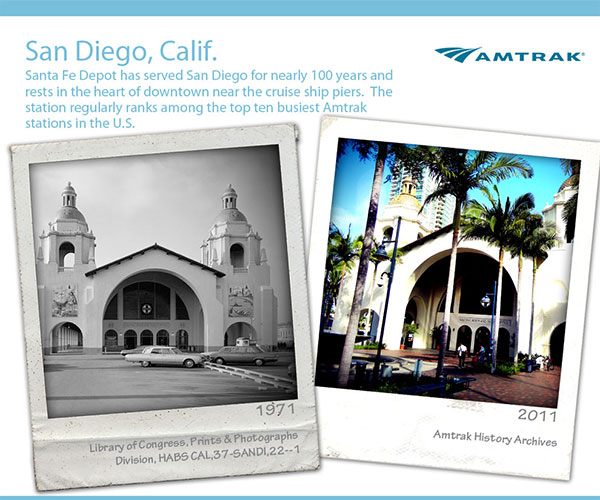
The Importance of Stations
In a report sponsored by The Great American Stations Foundation, Rail Stations: At the Heart of America’s Communities, the foundation’s former president Hank Dittmar outlined the many benefits of station renovation and restoration and has offered permission to share his thoughtful insights.
1) Stations are at the Heart of America’s Communities
Whether they are on Main Street or in downtown, America’s great stations were built in bustling city centers, and hence at the core of our growing metropolitan economy. Cities that invest in station projects are making a visible commitment to downtown revitalization.
2) Station Projects Can Become Economic Activity Centers
America’s train stations and depots were often built on a grand scale, even in smaller cities. In many cases, the opportunity exists to transform the train station into a mixed-use center of economic activity, while still accommodating train and bus service. In fact, the continual throughput of passengers makes train stations attractive locations for both office and retail uses. Recently built station facilities, which have often included other uses, have stimulated employment and retail sales.
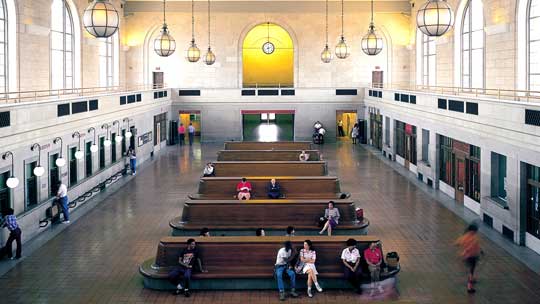
The ticket and waiting area at the New Haven, Conn. station.
3) Rail Stations are an Important Part of Our Heritage
The great stations of our country are important historical and architectural expressions of the growth and development of our nation, and of our core values and beliefs. Designed to embellish cities and towns and bring prestige to their builders, railroad stations play an important role in a community’s collective memory.
“Station restoration is more than simply a tribute to our past; it is also an investment in our future.”
– The late Senator Daniel Patrick Moynihan, father of the station restoration movement
4) Station Revitalization Catalyzes Community Revitalization
America’s great train stations have housed offices for the railroads, hotels, eating houses and other facilities, most of which are no longer in operation. In many cases, the opportunity exists to remake the train station into a mixed-use center of economic activity, while still accommodating train and bus services.
5) Station Revitalization Engages the Community
Time after time, cities find that station renovations spark tremendous demand for community use of the facility. Grand public spaces, they are one of the last expressions of greatness in public architecture, and one of the few places where everybody in a community comes together. Remaking train stations is about knitting community back together.
Next: Tourism Growth Amtrak established the Great American Stations Project in 2006 to educate communities on the benefits of redeveloping train stations, offer tools to community leaders to preserve their stations, and provide the appropriate Amtrak resources.
 Amtrak is seizing a once-in-a-lifetime opportunity to transform rail and Retrain Travel. By modernizing, enhancing and expanding trains, stations and infrastructure, Amtrak is meeting the rising demand for train travel. Amtrak offers unforgettable experiences to more than 500 destinations across 46 states and parts of Canada. Learn more at