

Van Nuys, CA (VNC)
The modern glass-and-concrete station, opened in 1995, is an intermodal facility shared with Metrolink commuter trains, local buses and taxis.
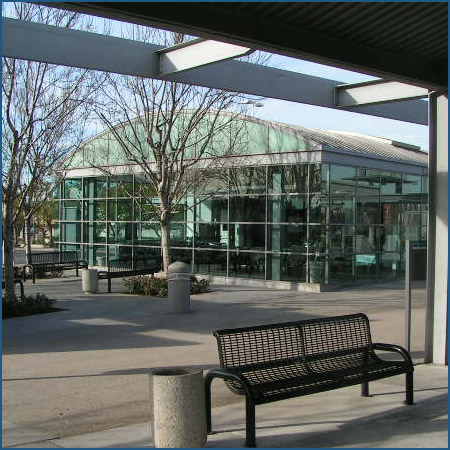
- Facility Ownership: State of California
- Parking Lot Ownership: State of California
- Platform Ownership: State of California
- Track Ownership: Los Angeles County Metropolitan Transportation Authority (LACMTA)
Alex Khalfin
Regional Contact
governmentaffairsoak@amtrak.com
For information about Amtrak fares and schedules, please visit Amtrak.com or call 1-800-USA-RAIL (1-800-872-7245).
The modern glass-and-concrete Van Nuys station, designed by LPA Architects, is an intermodal facility shared with Metrolink commuter trains, local buses and taxis. The station was opened and dedicated on December 18, 1995. A joint project of Caltrans and Amtrak, funding was provided by Caltrans with Amtrak providing construction management. Improvements for Metrolink commuters were funded by Caltrans and the city of Los Angeles. The station was updated and expanded again in 1998 to add transit buses.
In 1797, Franciscan missionaries established the Mission de San Fernando in the valley on the ranch of Francisco Reyes, and El Valle de los Encinos became El Valle de San Fernando. The Van Nuys neighborhood of Los Angeles, in the heart of the San Fernando Valley, had its inception in 1872 when Isaac Newton Van Nuys, a banker and real estate developer from New York State, built his frame house there. He had bought 60,000 acres of the 116,858 acre Rancho San Fernando in 1871. Van Nuys raised grain and invested in milling to produce flour and grain products of all kinds. It was not until February 22, 1911, that lot sales began in the new town of Van Nuys. In 1928, Mulholland’s St. Francis Dam broke and inundated the Valley and Van Nuys; it is estimated that over 400 people perished in that catastrophe.
Van Nuys later became part of Los Angeles and developed as an archetypal 20th century middle-class American suburb; today it is a melting pot of ethnic groups and home styles, though some historic examples of early 20th century architecture are still standing. Van Nuys was also at one time the location for the Van Nuys assembly plant, a major manufacturing facility for General Motors’ Chevrolet Division. The plant was dismantled in 1998, and the site has since been converted to a shopping mall called “The Plant.”
Van Nuys Boulevard became known from the 1950s to the 1970s as the center of teenage cruising and car culture, being celebrated in several motion pictures, including Van Nuys Boulevard. Though cruising is a thing of the past, the car culture is still visible in the many dealerships lining the boulevard’s ten-mile length as it passes from Sherman Oaks in the south to the foothills of the Verdugo Mountains in the north.
The Pacific Surfliner service is primarily financed through funds made available by the State of California, Department of Transportation, and is managed by the LOSSAN Joint Powers Authority.
Station Building (with waiting room)
Features
- ATM not available
- No elevator
- Payphones
- Quik-Trak kiosks
- Restrooms
- Ticket sales office
- Unaccompanied child travel allowed
- Vending machines
- No WiFi
- Arrive at least 45 minutes prior to departure if you're checking baggage or need ticketing/passenger assistance
- Arrive at least 30 minutes prior to departure if you're not checking baggage or don't need assistance
Baggage
- Amtrak Express shipping not available
- Checked baggage service available
- No checked baggage storage
- Bike boxes for sale
- Baggage carts available
- Ski bags not available
- Bag storage with Fee
- Shipping Boxes for sale
- Baggage assistance provided by Station Staff
Parking
- Same-day parking is available; fees may apply
- Overnight parking is available; fees may apply
Accessibility
- Payphones
- Accessible platform
- Accessible restrooms
- Accessible ticket office
- Accessible waiting room
- Accessible water fountain
- Same-day, accessible parking is available; fees may apply
- Overnight, accessible parking is available; fees may apply
- No high platform
- Wheelchair available
- Wheelchair lift available
Hours
Station Waiting Room Hours
| Mon | 07:30 am - 09:15 pm |
| Tue | 07:30 am - 09:15 pm |
| Wed | 07:30 am - 09:15 pm |
| Thu | 07:30 am - 09:15 pm |
| Fri | 07:30 am - 09:15 pm |
| Sat | 07:30 am - 09:15 pm |
| Sun | 07:30 am - 09:15 pm |
Ticket Office Hours
| Mon | 07:30 am - 09:15 pm |
| Tue | 07:30 am - 09:15 pm |
| Wed | 07:30 am - 09:15 pm |
| Thu | 07:30 am - 09:15 pm |
| Fri | 07:30 am - 09:15 pm |
| Sat | 07:30 am - 09:15 pm |
| Sun | 07:30 am - 09:15 pm |
Passenger Assistance Hours
| Mon | 07:30 am - 09:15 pm |
| Tue | 07:30 am - 09:15 pm |
| Wed | 07:30 am - 09:15 pm |
| Thu | 07:30 am - 09:15 pm |
| Fri | 07:30 am - 09:15 pm |
| Sat | 07:30 am - 09:15 pm |
| Sun | 07:30 am - 09:15 pm |
Checked Baggage Service
| Mon | 07:30 am - 09:15 pm |
| Tue | 07:30 am - 09:15 pm |
| Wed | 07:30 am - 09:15 pm |
| Thu | 07:30 am - 09:15 pm |
| Fri | 07:30 am - 09:15 pm |
| Sat | 07:30 am - 09:15 pm |
| Sun | 07:30 am - 09:15 pm |
Parking Hours
Quik-Track Kiosk Hours
| Mon | 07:30 am - 09:15 pm |
| Tue | 07:30 am - 09:15 pm |
| Wed | 07:30 am - 09:15 pm |
| Thu | 07:30 am - 09:15 pm |
| Fri | 07:30 am - 09:15 pm |
| Sat | 07:30 am - 09:15 pm |
| Sun | 07:30 am - 09:15 pm |
Lounge Hours
Amtrak Express Hours
| Mon | CLOSED |
| Tue | CLOSED |
| Wed | CLOSED |
| Thu | CLOSED |
| Fri | CLOSED |
| Sat | CLOSED |
| Sun | CLOSED |
 Amtrak established the Great American Stations Project in 2006 to educate communities on the benefits of redeveloping train stations, offer tools to community leaders to preserve their stations, and provide the appropriate Amtrak resources.
 Amtrak is seizing a once-in-a-lifetime opportunity to transform rail and Retrain Travel. By modernizing, enhancing and expanding trains, stations and infrastructure, Amtrak is meeting the rising demand for train travel. Amtrak offers unforgettable experiences to more than 500 destinations across 46 states and parts of Canada. Learn more at