

San Marcos, TX (SMC)
Spanish explorer Alonso de Leon reached this area in 1689 and named the spring-fed river for St. Mark. The intermodal center opened in 2001 and serves Amtrak, intercity and local buses.
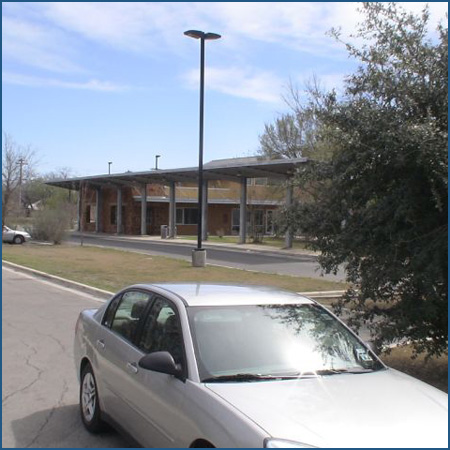
338 South Guadalupe Street
San Marcos, TX 78666-6310
- Facility Ownership: Capital Area Rural Transportation System
- Parking Lot Ownership: Capital Area Rural Transportation System
- Platform Ownership: Capital Area Rural Transportation System
- Track Ownership: Union Pacific Railroad
Todd Stennis
Regional Contact
governmentaffairsnol@amtrak.com
For information about Amtrak fares and schedules, please visit Amtrak.com or call 1-800-USA-RAIL (1-800-872-7245).
The San Marcos Amtrak stop consists of a platform with a shelter at the city’s intermodal station. Opened in 2001, the $1.9 million facility was funded through federal, state and local monies and also serves intercity and local buses. The planning process included stakeholders such as the Texas Department of Transportation, Amtrak, Greyhound, Southwest Texas State University, city and county officials and neighborhood groups. In addition to the intermodal station, two Missouri-Kansas-Texas (Katy) depots remain in San Marcos, as does a Missouri Pacific station, which is currently used as a business.
San Marcos, the Hays County seat, has been inhabited for more the 10,000 years. Archaeologists have found evidence of the Clovis culture at the San Marcos River. At the headwaters of the river are the limpid San Marcos Springs—the second largest collection of springs in Texas. Never in history has the San Marcos River run dry.
The earliest European settlers in San Marcos were Spanish missionaries in 1689. The Spanish explorer Alonso de Leon reached the river on April 25, the feast day of St. Mark the Evangelist, and thus named the river “San Marcos.” In April 1808, a group of Mexican families settled in the area, and named it Villa de San Marcos de Neve. The first Americans arrived in November, 1846, and two years later, the Texas Legislature organized Hays County, naming San Marcos the county seat. The town became a center for ginning and milling local agricultural products, and following the arrival of the International and Great Northern railroad in 1881, cattle and cotton provided the basis for growth.
The tourist industry has become a growing part of San Marcos’ economy. Attractions in San Marcos include the Hays County Courthouse, Aquarena Springs (an aquatic learning center run by Texas State University), Belvin Street District, the former City Hall and Fire Station, 21 city parks, the San Marcos River Walkway, and Wonder Caves (an ancient earthquake cave), among others. The San Marcos Springs are home to numerous endangered species, including the Texas Blind Salamander and the Fountain Darter.
The city hosts many annual festivals that highlight its different cultures, such as the annual VIVA! Cinco de Mayo Celebration, the Texas Natural & Western Swing Festival, Juneteenth celebrations, and the Sights and Sounds of Christmas. In addition, Texas State University, the alma mater of President Lyndon Baines Johnson, culturally enriches the city. Students organize many entertainment events and keep the city’s music scene vibrant.
Platform with Shelter
Features
- ATM not available
- No elevator
- Payphones
- No Quik-Trak kiosks
- Restrooms
- Unaccompanied child travel not allowed
- Vending machines
- No WiFi
- Arrive at least 30 minutes prior to departure
Baggage
- Amtrak Express shipping not available
- No checked baggage service
- No checked baggage storage
- Bike boxes not available
- No baggage carts
- Ski bags not available
- No bag storage
- Shipping boxes not available
- No baggage assistance
Parking
- Same-day parking is available; fees may apply
- Overnight parking is available; fees may apply
Accessibility
- Payphones
- Accessible platform
- Accessible restrooms
- No accessible ticket office
- Accessible waiting room
- Accessible water fountain
- Same-day, accessible parking is available; fees may apply
- Overnight, accessible parking is available; fees may apply
- No high platform
- No wheelchair
- Wheelchair lift available
Hours
 Amtrak established the Great American Stations Project in 2006 to educate communities on the benefits of redeveloping train stations, offer tools to community leaders to preserve their stations, and provide the appropriate Amtrak resources.
 Amtrak is seizing a once-in-a-lifetime opportunity to transform rail and Retrain Travel. By modernizing, enhancing and expanding trains, stations and infrastructure, Amtrak is meeting the rising demand for train travel. Amtrak offers unforgettable experiences to more than 500 destinations across 46 states and parts of Canada. Learn more at