

San Jose, CA - Diridon Station (SJC)
Historic Diridon Station is a major Silicon Valley transportation hub served by Amtrak and commuter trains, local and regional bus lines and light rail.
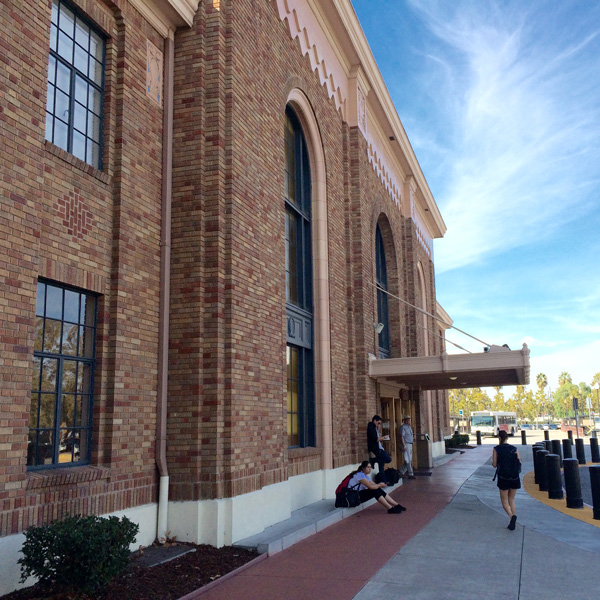
Diridon Station
65 Cahill Street
San Jose, CA 95110
- Facility Ownership: Peninsula Corridor Joint Powers Board
- Parking Lot Ownership: Peninsula Corridor Joint Powers Board
- Platform Ownership: Peninsula Corridor Joint Powers Board
- Track Ownership: Peninsula Corridor Joint Powers Board
Alex Khalfin
Regional Contact
governmentaffairsoak@amtrak.com
For information about Amtrak fares and schedules, please visit Amtrak.com or call 1-800-USA-RAIL (1-800-872-7245).
The San Jose station, formerly known as the Cahill Depot or the Southern Pacific Depot, was designed by Southern Pacific Railroad architect John H. Christie in the Italian Renaissance Revival style and built in 1935. This station had been the culmination of a 30-year effort to relocate 4.5 miles of the Coast Line of the Southern Pacific Railroad away from the heavy traffic of downtown San Jose’s Market Street depot to the eastern edge of Willow Glen, a more industrial neighborhood. The station was placed on the National Register of Historic Places in 1993 and its restoration completed in 1994, at which time it was rechristened the Diridon Station in honor of former Santa Clara County Supervisor Ron Diridon, who is considered the “father” of the VTA light rail system.
This multi-level station building, a compilation of rectangular sections, is 390 feet long and from 40 feet to 78 feet wide. The central section, which contains the waiting room, is 33 feet high. The exterior walls are clad with tapestry brick of varying colors and arranged in the English bond pattern. This depot is one of only four Italian Renaissance Revival depots in California, and is the only other large station in California built in the 1930s beside the Los Angeles Union Passenger Terminal.
The San Jose station is planned as a future station on the BART extension to Silicon Valley and California high-speed rail. If these plans are completed, the Diridon Station would offer connections to BART, high-speed rail, Caltrain “Baby Bullet”, Amtrak, ACE, and VTA light rail train and buses. There has also been some interest locally in using it as a focal point for transit-oriented community redevelopment.
European settlement came to this area of the Santa Clara valley when Juan Batista de Anza sited the town, and then when José Joaquín Moraga founded the Pueblo de San José de Guadalupe on November 29, 1777 near the banks of the Guadalupe River. San Jose was captured bloodlessly during the Bear Flag Revolt against Mexico in 1846 by the short-lived California Republic. When California joined the Union in 1850, San Jose became its first capital, as well as the first incorporated city in the state.
During the California Gold Rush, the New Almaden mines just south of the city were the largest mercury mines in North America—mercury was used to separate gold from ore. Mining operations began in 1847. The importance of the mercury industry explains why the local newspaper is named the Mercury News.
In 1884, Sarah Winchester, widow and heiress to the industrial empire that manufactured the Winchester rifles, was told that the Winchester family was cursed and haunted by ghosts who were killed by the rifle. She moved to San Jose from Connecticut and began the thirty-eight year construction of the famed mansion, a building of bewildering complexity created to appease the spirits, it is said. Before the 1906 San Francisco earthquake, it stood seven stories tall. Today, it is four stories tall and has approximately 160 rooms.
San Jose was a farming community for nearly two centuries, until after World War II. The Del Monte cannery in midtown was the largest employer for many years. IBM established their west coast headquarters in San Jose in 1943, and its disc drives were invented in their research facility there in 1962. In the 1960s, with the coming of high tech to the valley, enormous unplanned growth blossomed. The city is known today as “the capital of Silicon Valley,” for the large concentration of high technology computer, engineering, and microprocessor companies around the area. The giants of that industry are still there: Adobe Systems, BEA Systems, Cisco, SunPower and eBay, as well as facilities for Hewlett-Packard, IBM, Hitachi and Lockheed-Martin.
The Capitol Corridor route is primarily financed and operated in partnership with the State of California. It is managed by the Capitol Corridor Joint Powers Authority (CCJPA), which partners with Amtrak, the Union Pacific Railroad, Caltrans and the communities comprising the CCJPA to continue development of a cost-effective, viable and safe intercity passenger rail service.
Station Building (with waiting room)
Features
- ATM available
- Elevator
- Payphones
- Quik-Trak kiosks
- Restrooms
- Ticket sales office
- Unaccompanied child travel allowed
- No vending machines
- No WiFi
- Boarding gates close 5 Min before train departure time
- Arrive at least 45 minutes prior to departure if you're checking baggage or need ticketing/passenger assistance
- Arrive at least 30 minutes prior to departure if you're not checking baggage or don't need assistance
Baggage
- Amtrak Express shipping not available
- Checked baggage service available
- Checked baggage storage available
- Bike boxes for sale
- Baggage carts available
- Ski bags not available
- Bag storage with Fee
- Shipping Boxes for sale
- Baggage assistance provided by Station Staff
Parking
- Same-day parking is available; fees may apply
- Overnight parking is available; fees may apply
Accessibility
- Payphones
- Accessible platform
- Accessible restrooms
- No accessible ticket office
- Accessible waiting room
- Accessible water fountain
- Same-day, accessible parking is available; fees may apply
- Overnight, accessible parking is available; fees may apply
- No high platform
- Wheelchair available
- Wheelchair lift available
Hours
Station Waiting Room Hours
| Mon | 09:15 am - 08:45 pm |
| Tue | 09:15 am - 08:45 pm |
| Wed | 09:15 am - 08:45 pm |
| Thu | 09:15 am - 08:45 pm |
| Fri | 09:15 am - 08:45 pm |
| Sat | 09:15 am - 08:45 pm |
| Sun | 09:15 am - 08:45 pm |
Ticket Office Hours
| Mon | 09:15 am - 08:45 pm |
| Tue | 09:15 am - 08:45 pm |
| Wed | 09:15 am - 08:45 pm |
| Thu | 09:15 am - 08:45 pm |
| Fri | 09:15 am - 08:45 pm |
| Sat | 09:15 am - 08:45 pm |
| Sun | 09:15 am - 08:45 pm |
Passenger Assistance Hours
| Mon | 09:15 am - 08:45 pm |
| Tue | 09:15 am - 08:45 pm |
| Wed | 09:15 am - 08:45 pm |
| Thu | 09:15 am - 08:45 pm |
| Fri | 09:15 am - 08:45 pm |
| Sat | 09:15 am - 08:45 pm |
| Sun | 09:15 am - 08:45 pm |
Checked Baggage Service
| Mon | 09:15 am - 08:45 pm |
| Tue | 09:15 am - 08:45 pm |
| Wed | 09:15 am - 08:45 pm |
| Thu | 09:15 am - 08:45 pm |
| Fri | 09:15 am - 08:45 pm |
| Sat | 09:15 am - 08:45 pm |
| Sun | 09:15 am - 08:45 pm |
Parking Hours
| Mon | 12:01 am - 11:59 pm |
| Tue | 12:01 am - 11:59 pm |
| Wed | 12:01 am - 11:59 pm |
| Thu | 12:01 am - 11:59 pm |
| Fri | 12:01 am - 11:59 pm |
| Sat | 12:01 am - 11:59 pm |
| Sun | 12:01 am - 11:59 pm |
Quik-Track Kiosk Hours
| Mon | 09:15 am - 08:45 pm |
| Tue | 09:15 am - 08:45 pm |
| Wed | 09:15 am - 08:45 pm |
| Thu | 09:15 am - 08:45 pm |
| Fri | 09:15 am - 08:45 pm |
| Sat | 09:15 am - 08:45 pm |
| Sun | 09:15 am - 08:45 pm |
Lounge Hours
Amtrak Express Hours
| Mon | CLOSED |
| Tue | CLOSED |
| Wed | CLOSED |
| Thu | CLOSED |
| Fri | CLOSED |
| Sat | CLOSED |
| Sun | CLOSED |
 Amtrak established the Great American Stations Project in 2006 to educate communities on the benefits of redeveloping train stations, offer tools to community leaders to preserve their stations, and provide the appropriate Amtrak resources.
 Amtrak is seizing a once-in-a-lifetime opportunity to transform rail and Retrain Travel. By modernizing, enhancing and expanding trains, stations and infrastructure, Amtrak is meeting the rising demand for train travel. Amtrak offers unforgettable experiences to more than 500 destinations across 46 states and parts of Canada. Learn more at