

Reno, NV (RNO)
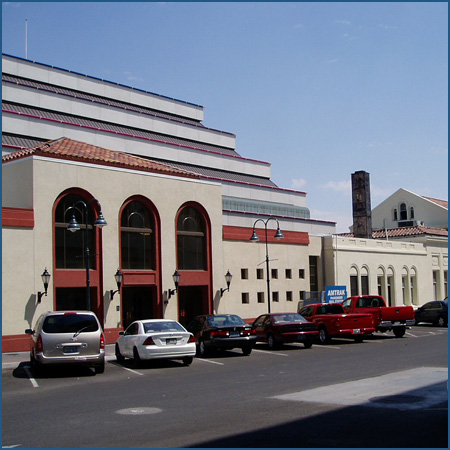
The Amtrak facility was added to the historic Southern Pacific Railroad station in 2005 as part of a project that depressed the railroad through the heart of the "biggest little city in the world."
- Facility Ownership: City of Reno
- Parking Lot Ownership: City of Reno
- Platform Ownership: City of Reno
- Track Ownership: City of Reno
Alex Khalfin
Regional Contact
governmentaffairsoak@amtrak.com
For information about Amtrak fares and schedules, please visit Amtrak.com or call 1-800-USA-RAIL (1-800-872-7245).
Located a few blocks north of the Truckee River in downtown Reno, the current Amtrak facility was added to the historic Southern Pacific station in 2005. This addition was part of a multi-year, $282 million project that depressed 2.2 miles of the Union Pacific mainline in the heart of the city and eliminated eleven grade crossings. The new building, sited west of the original depot, opened to the public in January 2006. Passengers enter from street level but descend to the waiting room located at the new track level.
In 2007, a large fountain that once stood in downtown Reno was installed in the Amtrak waiting room. Commissioned by the Women’s Christian Temperance Union, the 14-foot-tall monument was originally unveiled on Oct. 17, 1908. One of many erected by temperance leagues across the country, the fountain was intended to keep men out of saloons by providing a free source of water for them and their horses and dogs. Included on the fountain is the Red Cross symbol as well as crossed swords representing the First Calvary Volunteers of Nevada, which fought in the Philippines during the Spanish-American War.
The Reno City Council provided most of the $50,000 in funding for the fountain restoration and relocation, fulfilling a public art component of the track relocation project. While it no longer gurgles with water, the monument welcomes travelers. A plaque in the waiting room explains the history of the fountain, and is joined by historic images of the SP station.
The Southern Pacific Railroad (SP) station is the fourth one to stand on the downtown site. The first depot, built in 1869, burned down in the Reno fire of 1879. The second station opened a decade later, but it too succumbed to fire and was destroyed. The third station was bought by the SP in 1925, but the company chose to replace it the next year with a larger structure designed in the Mediterranean Revival style then popular with the SP.
It features a long, stucco-clad center block with five tall, rounded arches that form door and window openings. Smaller one-story wings extend to the east and west and feature inset panels with decorative swags above the windows. The gabled roof of the center block is covered in red clay tiles in keeping with the building’s Mediterranean styling. The former main waiting room retains its durable terrazzo flooring, wood-paneled ceiling and wooden benches.
To complement the new station, an American Railway Express building was erected across from the depot on North Lake Street to handle parcel mail. In 1931, the SP added a freight house along the tracks at North Evans Avenue. It had a raised platform to facilitate the movement of crates between the train and the freight room where goods were processed.
In late 2012, the SP depot was officially listed on the National Register of Historic Places in recognition of its physical integrity and the role played by the railroads in developing Reno. The City Council has approved plans to renovate the building to serve as a heritage center featuring exhibits on local history. It will also figure prominently in the National Park Service’s “Teaching with Historic Places” initiative, which uses properties on the National Register to illustrate history for the public. The Nevada State Historic Preservation Office granted the city $29,900 to assist with planning.
Known as the “biggest little city in the world”, Reno is Nevada’s third largest city. The area was settled by European-Americans as early as the 1850s, when pioneers made a living off of subsistence farming and supporting travelers making their way further westward. After the discovery of the Comstock Lode in 1857, Charles Fuller built a log toll bridge across the Truckee River in 1859 to support those moving along the California Trail and those seeking to access the silver rush – best accessed from the region that is now Reno. A small community grew up around the bridge, which Fuller sold to Myron Lake, who developed the community by adding a grist mill, kiln and livery stable to the hotel and eating house. At that point, the town started calling itself Lake’s Crossing.
Myron Lake realized in the late 1860s that his business would be greatly helped by the Central Pacific Railroad’s expansion and connection with the Union Pacific, and sought to attract some of the traffic of the transcontinental railroad to his town. In 1868 he deeded land to the Central Pacific in exchange for its promise to build a train station at Lake’s Crossing. When that was accomplished, the town of Reno was officially founded on May 13, 1868, named after Major General Jesse L. Reno, a Union officer killed in the Civil War.
Reno experienced several booms over the years. In 1871, Reno tailor Jacob Davis started reinforcing his pants with copper rivets, patenting the idea with his canvas supplier, Levi Strauss, and thus creating the fabulously successful Levi’s product. Around 1931, Reno’s legalization of gambling and its new, liberal divorce laws created another business boom in the region. As other states began to liberalize their divorce laws, however, that business faded. Before the 1960s, Reno was also known as the gambling capital of the world, and, though that business also remains, the rise of Las Vegas led Reno to diversify.
In recent years, Reno has experienced rapid growth and a strong economy as an area with a low cost of living compared to most towns in California. New construction is constant, and housing prices have increased dramatically. Meanwhile, some of the old downtown casinos are being turned into condominiums, leading to a revitalization of the downtown area. With the Amtrak station still in the center of town, Reno continues its long tradition of growing and prospering around the railroad.
Station Building (with waiting room)
Features
- ATM not available
- Elevator
- Payphones
- Quik-Trak kiosks
- Restrooms
- Ticket sales office
- Unaccompanied child travel allowed
- Vending machines
- No WiFi
- Arrive at least 45 minutes prior to departure if you're checking baggage or need ticketing/passenger assistance
- Arrive at least 20 minutes prior to departure if you're not checking baggage or don't need assistance
Baggage
- Amtrak Express shipping not available
- Checked baggage service available
- No checked baggage storage
- Bike boxes for sale
- No baggage carts
- Ski bags for sale
- No bag storage
- Shipping Boxes for sale
- Baggage assistance provided by Station Staff
Parking
- Same-day parking is available; fees may apply
- Overnight parking is not available
Accessibility
- Payphones
- Accessible platform
- Accessible restrooms
- Accessible ticket office
- Accessible waiting room
- No accessible water fountain
- Same-day, accessible parking is available; fees may apply
- Overnight, accessible parking is not available
- No high platform
- Wheelchair available
- Wheelchair lift available
Hours
Station Waiting Room Hours
| Mon | 07:30 am - 04:30 pm |
| Tue | 07:30 am - 04:30 pm |
| Wed | 07:30 am - 04:30 pm |
| Thu | 07:30 am - 04:30 pm |
| Fri | 07:30 am - 04:30 pm |
| Sat | 07:30 am - 04:30 pm |
| Sun | 07:30 am - 04:30 pm |
Ticket Office Hours
| Mon | 07:30 am - 04:30 pm |
| Tue | 07:30 am - 04:30 pm |
| Wed | 07:30 am - 04:30 pm |
| Thu | 07:30 am - 04:30 pm |
| Fri | 07:30 am - 04:30 pm |
| Sat | 07:30 am - 04:30 pm |
| Sun | 07:30 am - 04:30 pm |
Passenger Assistance Hours
| Mon | 07:30 am - 04:30 pm |
| Tue | 07:30 am - 04:30 pm |
| Wed | 07:30 am - 04:30 pm |
| Thu | 07:30 am - 04:30 pm |
| Fri | 07:30 am - 04:30 pm |
| Sat | 07:30 am - 04:30 pm |
| Sun | 07:30 am - 04:30 pm |
Checked Baggage Service
| Mon | 07:30 am - 04:30 pm |
| Tue | 07:30 am - 04:30 pm |
| Wed | 07:30 am - 04:30 pm |
| Thu | 07:30 am - 04:30 pm |
| Fri | 07:30 am - 04:30 pm |
| Sat | 07:30 am - 04:30 pm |
| Sun | 07:30 am - 04:30 pm |
Parking Hours
Quik-Track Kiosk Hours
| Mon | 07:30 am - 04:30 pm |
| Tue | 07:30 am - 04:30 pm |
| Wed | 07:30 am - 04:30 pm |
| Thu | 07:30 am - 04:30 pm |
| Fri | 07:30 am - 04:30 pm |
| Sat | 07:30 am - 04:30 pm |
| Sun | 07:30 am - 04:30 pm |
Lounge Hours
Amtrak Express Hours
| Mon | CLOSED |
| Tue | CLOSED |
| Wed | CLOSED |
| Thu | CLOSED |
| Fri | CLOSED |
| Sat | CLOSED |
| Sun | CLOSED |
 Amtrak established the Great American Stations Project in 2006 to educate communities on the benefits of redeveloping train stations, offer tools to community leaders to preserve their stations, and provide the appropriate Amtrak resources.
 Amtrak is seizing a once-in-a-lifetime opportunity to transform rail and Retrain Travel. By modernizing, enhancing and expanding trains, stations and infrastructure, Amtrak is meeting the rising demand for train travel. Amtrak offers unforgettable experiences to more than 500 destinations across 46 states and parts of Canada. Learn more at