

Picayune, MS (PIC)
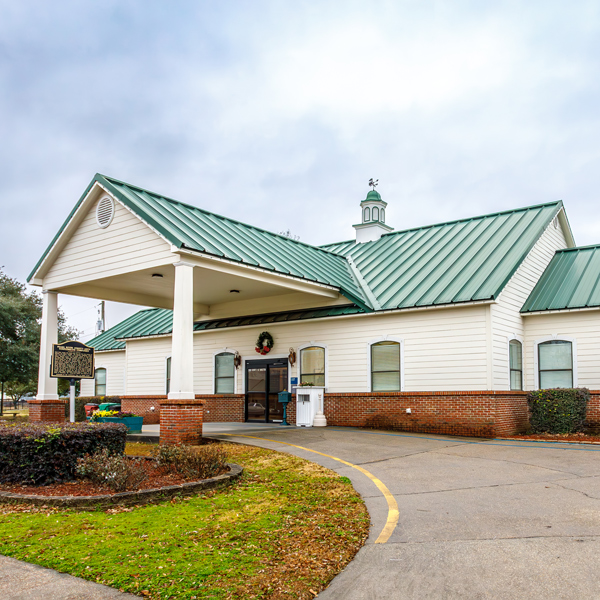
The Picayune depot opened amid celebration in 2008. Its design is meant to evoke the look of a classic early-twentieth century passenger station, including a porte-cochere and waiting room.
- Facility Ownership: City of Picayune
- Parking Lot Ownership: City of Picayune
- Platform Ownership: Norfolk Southern Railway
- Track Ownership: Norfolk Southern Railway
Todd Stennis
Regional Contact
governmentaffairsnol@amtrak.com
For information about Amtrak fares and schedules, please visit Amtrak.com or call 1-800-USA-RAIL (1-800-872-7245).
The Picayune station was built with the look of a classic early-twentieth century passenger depot, including a porte-cochere and waiting room. The previous station was an open waiting area near the platform, similar to a gazebo. The cost to construct the center was mostly funded through a grant from the Federal Transit Administration, which paid for 80 percent of the estimated $875,000. The remaining 20 percent was paid for by the city. The ribbon cutting and grand opening for the Picayune Intermodal Transportation Center took place on Oct. 16, 2008.
The region around Picayune did not come under U.S. control until 1810; it had changed hands several times between the French and Spanish with the varying fortunes of the southeastern U.S.
In 1904, Picayune was incorporated as a township and in 1922 as a city. At the time, Picayune became a center for cattle ranching and the growing of tung trees. Tung oil was once a primary ingredient in creating fine waterproof varnishes for wood, and in much demand for both furniture and the marine industries.
After Hurricane Camille destroyed most of the tung orchards in 1969, the region turned to cattle as its main economic staple. Following Hurricane Katrina in 2006, many people who had lived closer to the Gulf of Mexico moved to Picayune, seeking a safer home and easy commute back to the Gulf Coast.
Mississippi State University’s Crosby Arboretum is at Picayune, and it is the premier native plant conservatory in the southeastern United States, providing protection for the region’s biodiversity as well as for the public’s education and enjoyment.
Station Building (with waiting room)
Features
- ATM not available
- No elevator
- No payphones
- No Quik-Trak kiosks
- No Restrooms
- Unaccompanied child travel not allowed
- No vending machines
- No WiFi
- Arrive at least 30 minutes prior to departure
Baggage
- Amtrak Express shipping not available
- No checked baggage service
- No checked baggage storage
- Bike boxes not available
- No baggage carts
- Ski bags not available
- No bag storage
- Shipping boxes not available
- No baggage assistance
Parking
- Same-day parking is available; fees may apply
- Overnight parking is available; fees may apply
Accessibility
- No payphones
- Accessible platform
- No accessible restrooms
- No accessible ticket office
- No accessible waiting room
- No accessible water fountain
- Same-day, accessible parking is available; fees may apply
- Overnight, accessible parking is available; fees may apply
- No high platform
- No wheelchair
- Wheelchair lift available
Hours
 Amtrak established the Great American Stations Project in 2006 to educate communities on the benefits of redeveloping train stations, offer tools to community leaders to preserve their stations, and provide the appropriate Amtrak resources.
 Amtrak is seizing a once-in-a-lifetime opportunity to transform rail and Retrain Travel. By modernizing, enhancing and expanding trains, stations and infrastructure, Amtrak is meeting the rising demand for train travel. Amtrak offers unforgettable experiences to more than 500 destinations across 46 states and parts of Canada. Learn more at