

Greenville, SC (GRV)
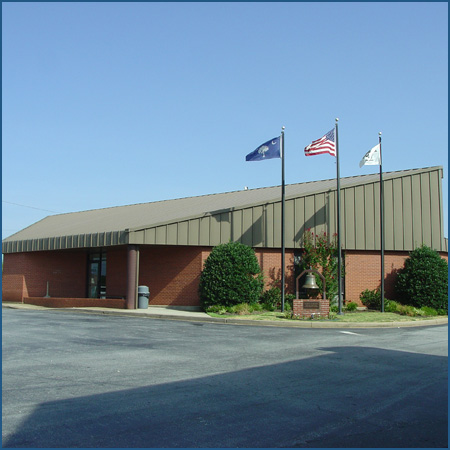
The red brick depot was built in 1988 by Norfolk Southern Railway as a combined passenger and freight structure. Greenville is especially known for its automotive-related industries.
1120 West Washington Street
Greenville, SC 29601
- Facility Ownership: Norfolk Southern Railway
- Parking Lot Ownership: Norfolk Southern Railway
- Platform Ownership: Norfolk Southern Railway
- Track Ownership: Norfolk Southern Railway
Todd Stennis
Regional Contact
governmentaffairsnol@amtrak.com
For information about Amtrak fares and schedules, please visit Amtrak.com or call 1-800-USA-RAIL (1-800-872-7245).
The modern red brick Greenville depot was built in 1988 by Norfolk Southern Railway in their freight yard as a combined passenger and freight depot, replacing the elaborate early twentieth century Southern Railway depot.
The railroad came to Greenville as early as the 1850s, when the Greenville and Columbia Railroad built its terminal in the West End area of the town. Greenville was a stop along the early electrified passenger and freight railway, the Piedmont and Northern, also running through Spartanburg and Charlotte, which was built by Duke Power to promote industrial growth in upstate South Carolina. The P&N ran a passenger service from about 1914 to 1951, and freight was hauled by diesel locomotives until 1967, when P&N became part of the Seaboard Coast Line.
Greenville’s first settler, Indian trader Richard Pearis, established his plantation in the foothills of the Appalachian Mountains on the Reedy River, in what would become the downtown area in 1770. The area at that time belonged to the Cherokee Indians as favorite hunting grounds. Following the defeat of both the British and the Cherokees in the Revolutionary War, South Carolina made what would become both the city and county of Greenville available to Patriot soldiers for settlement. In 1797, Thomas Brandon purchased the grant of land that would become Greenville and Lemuel Alston drew up plans for the village. In 1815, Alston sold his holdings to Vardry McBee, who was largely responsible for growing the town through his progressive efforts at improving commerce in the area for the next several decades. In 1831, the Village of Greenville became the Town of Greenville and established a city government. In February of 1869, the town charter was amended by the South Carolina General Assembly to establish it as a city.
In the early 1900s, Greenville, like other cities in that portion of the American south, became a center of textile production. However, gold and other minerals have been mined in the Greenville area since the 1800s; rubies, amethysts, garnets, tourmalines, unakite and emeralds have been found within 60 miles of the city, likely washed down from the nearby mountains. Today, the city is the North American headquarters for Michelin, and close to a BMW manufacturing facility. Other automotive-related industry has come to the area and created a consortium, the International Center for Automotive Research, and this in turn has encouraged other industry to invest there. Plants in Greenville also manufacture metals, paper, rubber products, chemicals, and electronic equipment. Greenville is the home of Furman University and Bob Jones University as well.
Greenville has a number of attractions including the City of Greenville Parks, Recreation, and Zoo; the Peace Center for the Performing Arts; the large Falls Park on the Reedy and the Liberty Bridge; the Bob Jones University Museum and Gallery of Religious Art; and the Roper Mountain Science Center.
Since the 1980s Greenville has turned to restoring and reviving its downtown. Through the 1990s, the city redeveloped a languishing industrial area into an arts complex that incorporated historically significant buildings. It stabilized a stagnant historic district with mixed-use projects, which in turn encouraged residential use of upper stories and former church classrooms. The National Trust for Historic Preservation awarded Greenville with the Great American Main Street Award in 2003.
Station Building (with waiting room)
Features
- ATM not available
- No elevator
- No payphones
- No Quik-Trak kiosks
- Restrooms
- Unaccompanied child travel not allowed
- Vending machines
- No WiFi
- Arrive at least 30 minutes prior to departure
Baggage
- Amtrak Express shipping not available
- No checked baggage service
- No checked baggage storage
- Bike boxes not available
- Baggage carts available
- Ski bags not available
- No bag storage
- Shipping boxes not available
- No baggage assistance
Parking
- Same-day parking is available; fees may apply
- Overnight parking is available; fees may apply
Accessibility
- No payphones
- Accessible platform
- Accessible restrooms
- No accessible ticket office
- Accessible waiting room
- Accessible water fountain
- Same-day, accessible parking is available; fees may apply
- Overnight, accessible parking is available; fees may apply
- No high platform
- No wheelchair
- Wheelchair lift available
Hours
Station Waiting Room Hours
| Mon | 04:00 am - 06:00 am 10:00 pm - 11:59 pm |
| Tue | 04:00 am - 06:00 am 10:00 pm - 11:59 pm |
| Wed | 04:00 am - 06:00 am 10:00 pm - 11:59 pm |
| Thu | 04:00 am - 06:00 am 10:00 pm - 11:59 pm |
| Fri | 04:00 am - 06:00 am 10:00 pm - 11:59 pm |
| Sat | 04:00 am - 06:00 am 10:00 pm - 11:59 pm |
| Sun | 04:00 am - 06:00 am 10:00 pm - 11:59 pm |
Ticket Office Hours
| Mon | CLOSED |
| Tue | CLOSED |
| Wed | CLOSED |
| Thu | CLOSED |
| Fri | CLOSED |
| Sat | CLOSED |
| Sun | CLOSED |
Passenger Assistance Hours
| Mon | CLOSED |
| Tue | CLOSED |
| Wed | CLOSED |
| Thu | CLOSED |
| Fri | CLOSED |
| Sat | CLOSED |
| Sun | CLOSED |
Checked Baggage Service
| Mon | CLOSED |
| Tue | CLOSED |
| Wed | CLOSED |
| Thu | CLOSED |
| Fri | CLOSED |
| Sat | CLOSED |
| Sun | CLOSED |
Parking Hours
| Mon | 24 HOURS |
| Tue | 24 HOURS |
| Wed | 24 HOURS |
| Thu | 24 HOURS |
| Fri | 24 HOURS |
| Sat | 24 HOURS |
| Sun | 24 HOURS |
Quik-Track Kiosk Hours
Lounge Hours
Amtrak Express Hours
| Mon | CLOSED |
| Tue | CLOSED |
| Wed | CLOSED |
| Thu | CLOSED |
| Fri | CLOSED |
| Sat | CLOSED |
| Sun | CLOSED |
 Amtrak established the Great American Stations Project in 2006 to educate communities on the benefits of redeveloping train stations, offer tools to community leaders to preserve their stations, and provide the appropriate Amtrak resources.
 Amtrak is seizing a once-in-a-lifetime opportunity to transform rail and Retrain Travel. By modernizing, enhancing and expanding trains, stations and infrastructure, Amtrak is meeting the rising demand for train travel. Amtrak offers unforgettable experiences to more than 500 destinations across 46 states and parts of Canada. Learn more at