

Fullerton, CA (FUL)
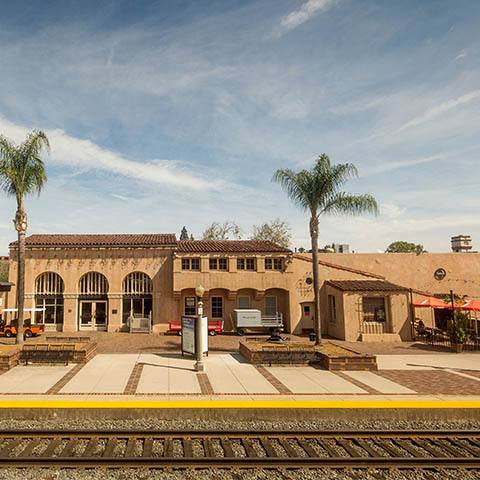
A masterwork of the Spanish Colonial Revival style, the 1930 depot includes graceful arches, quatrefoil windows, decorative metalwork and a Monterey-style balcony.
120 East Santa Fe Avenue
Fullerton, CA 92832
- Facility Ownership: City of Fullerton
- Parking Lot Ownership: City of Fullerton
- Platform Ownership: Burlington Northern Santa Fe Railway (BNSF)
- Track Ownership: Burlington Northern Santa Fe Railway (BNSF)
Alex Khalfin
Regional Contact
governmentaffairsoak@amtrak.com
For information about Amtrak fares and schedules, please visit Amtrak.com or call 1-800-USA-RAIL (1-800-872-7245).
The first depot was built in Victorian style in 1888. This would serve the Santa Fe Railroad, which reached the town in 1889. As with many other parts of California during this time, the town of Fullerton was growing at a steady pace. Huge booms in agriculture and oil brought many jobs and much prosperity for those migrating to the area. As many people were still arriving in California by train at this time, the Fullerton Santa Fe Depot needed updating to accommodate the new arrivals.
The development of a new depot in July of 1930 by the Santa Fe Railway would serve as their answer to this predicament. This new depot was built slightly east of the original and was designed using an entirely different fashion of architecture. Modeled after the Spanish Colonial style, the depot was a masterwork whose aim was to articulate the progress of Fullerton through its first thirty years of the new century. Although the interior of the new depot is patterned with remarkable arches, it is the exterior that is truly eye-catching. The gable and shed roof of the depot is lined in a Mission tile, while quatrefoil windows, with their wooden shutters and concrete grillwork, serve to outline a Monterey style balcony.
Over the years, the Fullerton Depot has seen numerous slight modifications. In 1991 the property came under the ownership of the Fullerton Redevelopment Agency, and a full-scale restoration was undertaken. Paint along the outer walls has since been removed, and the colorful stucco finish has been rejuvenated and preserved. Additionally, original features in the main lobby, such as the ticket counter, have either been replicated or refurbished to reflect their earliest conditions.
The interesting truth is that the town of Fullerton was created to serve as a station along the Santa Fe Railroad. In 1887, Edward and George Amerige, two land owning brothers from Malden, Massachusetts, brokered a critical deal with George Fullerton, the President of Pacific Land and Improvement, a subsidiary of the Santa Fe Railway. The deal proposed that railroad development plans be drawn to include the brothers’ land in the railway’s route. In turn, they would offer the Santa Fe free right-of-way and half interest in the approximately 430-acres of land they had purchased just north of Anaheim. Fullerton, whose job for the Santa Fe Railway included purchasing land for railroad development, accepted the deal. Although the actual reason for naming the town after George Fullerton is disputed, what is certain is that the honor is due, at least in part, to his important role in the town’s history.
The thriving economy that allowed the town to prosper was particularly peaked by agriculture. Charles Chapman, descendent of the famous John “Johnny Appleseed” Chapman, established a prosperous orange grove in 1894 using the Valencia orange, leading many others in the region to follow suit. Walnuts and avocados also became staples for this railroad town. The recipe for the drink Hawaiian Punch was developed in a garage in Fullerton.
The Fender musical instrument company had a manufacturing plant in Fullerton until 1985 when the company was sold to a group of private investors. The Fender products contributed to the development of the rock and roll music genre. Many signs in the city bear the guitar shape in the background.
In addition to servicing Amtrak trains, the station also serves two Metrolink lines and Orange County bus lines. This heavy traffic makes it one of the busiest depots in all of Orange County. The Pacific Surfliner service is primarily financed through funds made available by the State of California, Department of Transportation, and is managed by the LOSSAN Joint Powers Authority.
Station Building (with waiting room)
Features
- ATM available
- Elevator
- Payphones
- Quik-Trak kiosks
- Restrooms
- Ticket sales office
- Unaccompanied child travel allowed
- Vending machines
- No WiFi
- Arrive at least 45 minutes prior to departure if you're checking baggage or need ticketing/passenger assistance
- Arrive at least 30 minutes prior to departure if you're not checking baggage or don't need assistance
Baggage
- Amtrak Express shipping not available
- Checked baggage service available
- Checked baggage storage available
- Bike boxes for sale
- Baggage carts available
- Ski bags not available
- Bag storage
- Shipping Boxes for sale
- No baggage assistance
Parking
- Same-day parking is available; fees may apply
- Overnight parking is available; fees may apply
Accessibility
- Payphones
- Accessible platform
- Accessible restrooms
- Accessible ticket office
- Accessible waiting room
- Accessible water fountain
- Same-day, accessible parking is available; fees may apply
- Overnight, accessible parking is available; fees may apply
- No high platform
- Wheelchair available
- Wheelchair lift available
Hours
Station Waiting Room Hours
| Mon | 06:00 am - 11:00 pm |
| Tue | 06:00 am - 11:00 pm |
| Wed | 06:00 am - 11:00 pm |
| Thu | 06:00 am - 11:00 pm |
| Fri | 06:00 am - 11:00 pm |
| Sat | 06:00 am - 11:00 pm |
| Sun | 06:00 am - 11:00 pm |
Ticket Office Hours
| Mon | 06:00 am - 11:00 pm |
| Tue | 06:00 am - 11:00 pm |
| Wed | 06:00 am - 11:00 pm |
| Thu | 06:00 am - 11:00 pm |
| Fri | 06:00 am - 11:00 pm |
| Sat | 06:00 am - 11:00 pm |
| Sun | 06:00 am - 11:00 pm |
Passenger Assistance Hours
| Mon | 06:00 am - 11:00 pm |
| Tue | 06:00 am - 11:00 pm |
| Wed | 06:00 am - 11:00 pm |
| Thu | 06:00 am - 11:00 pm |
| Fri | 06:00 am - 11:00 pm |
| Sat | 06:00 am - 11:00 pm |
| Sun | 06:00 am - 11:00 pm |
Checked Baggage Service
| Mon | 06:00 am - 11:00 pm |
| Tue | 06:00 am - 11:00 pm |
| Wed | 06:00 am - 11:00 pm |
| Thu | 06:00 am - 11:00 pm |
| Fri | 06:00 am - 11:00 pm |
| Sat | 06:00 am - 11:00 pm |
| Sun | 06:00 am - 11:00 pm |
Parking Hours
Quik-Track Kiosk Hours
| Mon | 06:00 am - 11:00 pm |
| Tue | 06:00 am - 11:00 pm |
| Wed | 06:00 am - 11:00 pm |
| Thu | 06:00 am - 11:00 pm |
| Fri | 06:00 am - 11:00 pm |
| Sat | 06:00 am - 11:00 pm |
| Sun | 06:00 am - 11:00 pm |
Lounge Hours
Amtrak Express Hours
| Mon | CLOSED |
| Tue | CLOSED |
| Wed | CLOSED |
| Thu | CLOSED |
| Fri | CLOSED |
| Sat | CLOSED |
| Sun | CLOSED |
 Amtrak established the Great American Stations Project in 2006 to educate communities on the benefits of redeveloping train stations, offer tools to community leaders to preserve their stations, and provide the appropriate Amtrak resources.
 Amtrak is seizing a once-in-a-lifetime opportunity to transform rail and Retrain Travel. By modernizing, enhancing and expanding trains, stations and infrastructure, Amtrak is meeting the rising demand for train travel. Amtrak offers unforgettable experiences to more than 500 destinations across 46 states and parts of Canada. Learn more at