

Fredericksburg, VA (FBG)
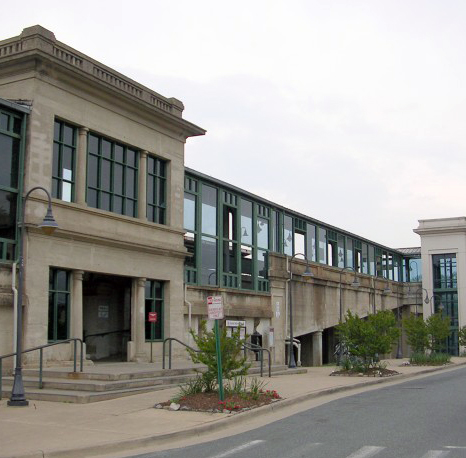
Located one block from the Rappahannock River waterfront, and anchoring the southern edge of downtown, the historic 1910 brick depot now houses a restaurant. Amtrak and VRE customers use the adjacent platforms with shelters.
425 Princess Anne Street
Fredericksburg, VA 22401-6067
- Facility Ownership: Virginia Department of Rail and Public Transportation (VADRPT)
- Parking Lot Ownership: City of Fredericksburg
- Platform Ownership: VADRPT
- Track Ownership: CSX Transportation
Denise Miller
Regional Contact
governmentaffairsnyc@amtrak.com
For information about Amtrak fares and schedules, please visit Amtrak.com or call 1-800-USA-RAIL (1-800-872-7245).
The Amtrak station in Fredericksburg consists of a platform and shelter adjacent to the 1910 brick depot, which is located one block from the Rappahannock River waterfront. Today, the building is occupied by a restaurant. The platforms and shelters run over Sophia, Caroline, Princess Anne and Charles streets in the historic downtown, and an elaborate system of stairs and ramps is used to reach the platforms from street level. The station is also served by Virginia Railway Express (VRE) commuter trains that link the area with the nation’s capital, as well as by local buses.
Congresswoman Jo Ann Davis secured $2.5 million in funding to improve the station in the late 2000s. VRE subsequently renovated the facility, specifically focusing on improvements to the concrete work on the underside of the elevated track and platform structure.
In spring 2024, VRE and other stakeholders gathered at the station to celebrate completion of the latest improvement project. The $14.1 million effort included rehabilitation of existing platforms, stairs and the four rail bridges that carry the tracks over nearby streets. New stairs were built at the southeast corner of the station to connect the platform and a parking lot, and new signage, sidewalks and lighting were installed. The work largely was funded through a federal State of Good Repair Grant overseen by the Federal Transit Administration, with state and local matching funds.
The station improvements are also part of the commonwealth’s “Transforming Rail in Virginia” initiative to expand and improve passenger, commuter and freight rail in the state and create a vital connection in America’s national rail network between the Northeast and Southeast corridors. The program is a partnership among the commonwealth, Amtrak, freight railroad CSX and VRE.
Rail has been important in Fredericksburg since the Richmond, Fredericksburg and Potomac Railroad was chartered in 1834 to run a line through from Richmond up to the Potomac River at Aquia Creek. Controlling the railroad through Fredericksburg was at issue during the American Civil War. After the war, by 1872, connections went through to Washington, D.C., giving this portion of Virginia an all-rail route from Richmond and across the Potomac to Washington.
Fredericksburg sits on the banks of the Rappahannock, at the head of river navigation, which has made it an important site since colonial times. The Virginia General Assembly established a fort in the area in 1676, just south of the present city. In 1720, the Assembly established a new county, Spotsylvania (after the governor) and established Fredericksburg in 1728 as a port. Named for Frederick, Prince of Wales, son of George II, the streets bore names of the royal family. For a time it served as the county seat, and was later incorporated in 1781. It received its charter as an independent city in 1879.
The city is closely associated with George Washington, whose family moved in 1738 to a farm in Stafford County, across the Rappahannock from Fredericksburg, so that Augustine Washington could live closer to the Accokeek Creek Iron Furnace, which he managed. The house—uncovered finally in an archaeological dig in July 2008—was central to the Washington family from the 1740s until 1772, when Mary Washington moved across the river to Fredericksburg.
George Washington grew up on the farm and managed it until he moved up to the Mount Vernon estate near Washington, D.C., in 1754. Today, the farm is a working archaeological site and historical park open to visitors.
Fredericksburg gained strategic importance during the American Civil War because of its position midway between Washington, D.C. and Richmond, Virginia, the opposing capitals. During the Battle of Fredericksburg in early December of 1862, the town sustained significant damage due to bombardment and looting at the hands of Federal troops, who were in turn devastated at Confederate hands. A second battle was fought in and around the town in connection with the Chancellorsville Campaign in 1863; and the Battle of the Wilderness and the Battle of Spotsylvania Court House were fought nearby in May 1864. The extensive nearby battlefield parks, the Fredericksburg and Spotsylvania County Battlefields Memorial, pay tribute to what has been called the bloodiest landscape in the country, vividly reflect the Civil War’s terrible cost—more than 85,000 men wounded and 15,000 killed—and honor the trials of a community and nation at war.
After the war, Fredericksburg recovered its position as a center of local trade and expanded. The University of Mary Washington was founded there in 1908 as a women’s school, and evolved under the University of Virginia system into an independent coeducational institution. Today, Fredericksburg is the hub of a rapidly growing region in Northern Virginia; however it still retains its 40-block historic district and the surrounding areas maintain memorial battlefield monuments. It is aptly nicknamed, “America’s most historic city.”
Fredericksburg has been home to many notables other than the Washington family, including George Mason, John Paul Jones, George Wheedon, and Hugh Mercer; and in modern times, actor Judge Rheinhold and author Florence King.
Northeast Regional service within Virginia is funded in part through grants made available by the Commonwealth of Virginia.
Platform with Shelter
Features
- ATM not available
- Elevator
- Payphones
- No Quik-Trak kiosks
- No Restrooms
- Unaccompanied child travel not allowed
- No vending machines
- No WiFi
- Arrive at least 30 minutes prior to departure
Baggage
- Amtrak Express shipping not available
- No checked baggage service
- No checked baggage storage
- Bike boxes not available
- No baggage carts
- Ski bags not available
- No bag storage
- Shipping boxes not available
- No baggage assistance
Parking
- Same-day parking is not available
- Overnight parking is not available
Accessibility
- Payphones
- Accessible platform
- No accessible restrooms
- No accessible ticket office
- Accessible waiting room
- No accessible water fountain
- Same-day, accessible parking is not available
- Overnight, accessible parking is not available
- No high platform
- No wheelchair
- Wheelchair lift available
Hours
 Amtrak established the Great American Stations Project in 2006 to educate communities on the benefits of redeveloping train stations, offer tools to community leaders to preserve their stations, and provide the appropriate Amtrak resources.
 Amtrak is seizing a once-in-a-lifetime opportunity to transform rail and Retrain Travel. By modernizing, enhancing and expanding trains, stations and infrastructure, Amtrak is meeting the rising demand for train travel. Amtrak offers unforgettable experiences to more than 500 destinations across 46 states and parts of Canada. Learn more at