

Columbia, SC (CLB)
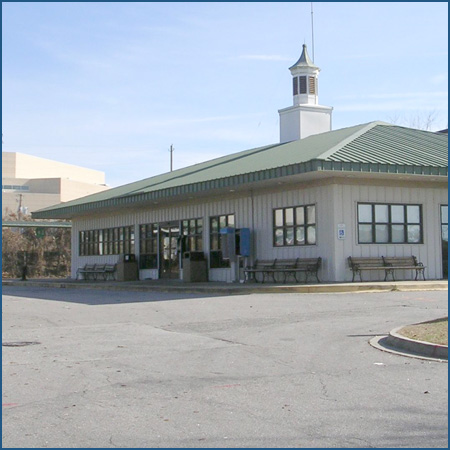
Constructed in 1991 and featuring a delicate cupola, the depot is about three miles from downtown and within walking distance of the University of South Carolina campus.
- Facility Ownership: City of Columbia
- Parking Lot Ownership: City of Columbia
- Platform Ownership: CSX Transportation
- Track Ownership: CSX Transportation
Todd Stennis
Regional Contact
governmentaffairsnol@amtrak.com
For information about Amtrak fares and schedules, please visit Amtrak.com or call 1-800-USA-RAIL (1-800-872-7245).
The Amtrak station in Columbia is a steel structure, built in 1991, about three miles from the downtown area and close to the University of South Carolina campus. Amtrak moved the station to the current Pulaski Street location when the city removed the rails and the Seaboard Air Line Railway trestle along Lincoln Street. The former Seaboard Air Line and Amtrak station, built of red brick in 1903, still stands at Gervais Street. It was abandoned and then restored and made into commercial space.
Columbia, the seat of Richland County and the state capital, is sited where the confluence of the Broad and Saluda Rivers form the Congaree River, part of the greater Santee River system connecting the uplands with the lowlands of South Carolina. The Congarees, a frontier fort on the west bank of the Congaree River, was located in the eighteenth century at the head of the navigable river system, which was important in trade before the railroads came.
In 1786, the city’s site was chosen as for the state capital because of its central location, and the city was one of the first planned cities in the New World. Columbia was designed as a town of 400 blocks in a two-mile square along the river and divided by wide thoroughfares—because, as the story has it, it was believed that hungry mosquitoes could not fly further than 60 feet before dying of starvation.
Columbia received its town charter in 1805, and chartered as a city in 1854. It became the largest inland city in the Carolinas, and grew rapidly after the railroads reached it in the 1840s. Rail lines through the city primarily transported cotton, which was the focus of its economic activity at that time.
Columbia’s First Baptist Church hosted the South Carolina Secession Convention in late 1860, and the city continued to be a convenient central meeting place within the Confederacy throughout the ensuing American Civil War. On February 17, 1865, General William Tecumseh Sherman’s federal troops occupied the city and burned much of it. Legend has it that the First Baptist Church was saved by the cunning misdirection of the groundskeeper when asked where the secessionists met; he pointed them toward the Methodist church nearby.
The early twentieth century saw Columbia emerge as a regional textile manufacturing center, and by 1907, the city had six mills in operation, employing over 3,400 workers—a large number in those days. It continued through the 1930s and 1940s as a trading and textile center.
In 1917, the U.S. Army constructed Camp Jackson nearby as a field artillery replacement depot. It was reactivated in 1940 as Fort Jackson, and became a permanent installation.
The University of South Carolina, chartered in 1801, is renowned for its business programs as well as its research and technology initiatives. Columbia is also home to six other colleges.
Since 1967, historic refurbishment has played a significant part of shaping modern downtown Columbia. The 1990s and 2000s have seen revitalization of the downtown area and the Congaree Vista district along Gervais Street, the old warehouse district, where the 1903 rail station still stands. The restoration efforts have begun to attract more residents and businesses. The Vista now houses art galleries, restaurants, unique shops, and professional office space, as well as nearby student and residential housing.
Station Building (with waiting room)
Features
- ATM not available
- No elevator
- No payphones
- No Quik-Trak kiosks
- Restrooms
- Ticket sales office
- Unaccompanied child travel not allowed
- Vending machines
- No WiFi
- Arrive at least 45 minutes prior to departure if you're checking baggage or need ticketing/passenger assistance
- Arrive at least 30 minutes prior to departure if you're not checking baggage or don't need assistance
Baggage
- Amtrak Express shipping not available
- Checked baggage service available
- Checked baggage storage available
- Bike boxes for sale
- Baggage carts available
- Ski bags not available
- Bag storage Fee
- Shipping Boxes for sale
- Baggage assistance provided by Station Staff
Parking
- Same-day parking is available for free
- Overnight parking is available for free
Accessibility
- No payphones
- Accessible platform
- Accessible restrooms
- Accessible ticket office
- Accessible waiting room
- Accessible water fountain
- Same-day, accessible parking is available for free
- Overnight, accessible parking is available for free
- No high platform
- Wheelchair available
- Wheelchair lift available
Hours
Station Waiting Room Hours
| Mon | 12:00 am - 08:00 am 10:30 pm - 11:59 pm |
| Tue | 12:00 am - 08:00 am 10:30 pm - 11:59 pm |
| Wed | 12:00 am - 08:00 am 10:30 pm - 11:59 pm |
| Thu | 12:00 am - 08:00 am 10:30 pm - 11:59 pm |
| Fri | 12:00 am - 08:00 am 10:30 pm - 11:59 pm |
| Sat | 12:00 am - 08:00 am 10:30 pm - 11:59 pm |
| Sun | 12:00 am - 08:00 am 10:30 pm - 11:59 pm |
Ticket Office Hours
| Mon | 12:00 am - 08:00 am 10:30 pm - 11:59 pm |
| Tue | 12:00 am - 08:00 am 10:30 pm - 11:59 pm |
| Wed | 12:00 am - 08:00 am 10:30 pm - 11:59 pm |
| Thu | 12:00 am - 08:00 am 10:30 pm - 11:59 pm |
| Fri | 12:00 am - 08:00 am 10:30 pm - 11:59 pm |
| Sat | 12:00 am - 08:00 am 10:30 pm - 11:59 pm |
| Sun | 12:00 am - 08:00 am 10:30 pm - 11:59 pm |
Passenger Assistance Hours
| Mon | 12:00 am - 08:00 am 10:30 pm - 11:59 pm |
| Tue | 12:00 am - 08:00 am 10:30 pm - 11:59 pm |
| Wed | 12:00 am - 08:00 am 10:30 pm - 11:59 pm |
| Thu | 12:00 am - 08:00 am 10:30 pm - 11:59 pm |
| Fri | 12:00 am - 08:00 am 10:30 pm - 11:59 pm |
| Sat | 12:00 am - 08:00 am 10:30 pm - 11:59 pm |
| Sun | 12:00 am - 08:00 am 10:30 pm - 11:59 pm |
Checked Baggage Service
| Mon | 12:00 am - 08:00 am 10:30 pm - 11:59 pm |
| Tue | 12:00 am - 08:00 am 10:30 pm - 11:59 pm |
| Wed | 12:00 am - 08:00 am 10:30 pm - 11:59 pm |
| Thu | 12:00 am - 08:00 am 10:30 pm - 11:59 pm |
| Fri | 12:00 am - 08:00 am 10:30 pm - 11:59 pm |
| Sat | 12:00 am - 08:00 am 10:30 pm - 11:59 pm |
| Sun | 12:00 am - 08:00 am 10:30 pm - 11:59 pm |
Parking Hours
Quik-Track Kiosk Hours
Lounge Hours
Amtrak Express Hours
| Mon | CLOSED |
| Tue | CLOSED |
| Wed | CLOSED |
| Thu | CLOSED |
| Fri | CLOSED |
| Sat | CLOSED |
| Sun | CLOSED |
 Amtrak established the Great American Stations Project in 2006 to educate communities on the benefits of redeveloping train stations, offer tools to community leaders to preserve their stations, and provide the appropriate Amtrak resources.
 Amtrak is seizing a once-in-a-lifetime opportunity to transform rail and Retrain Travel. By modernizing, enhancing and expanding trains, stations and infrastructure, Amtrak is meeting the rising demand for train travel. Amtrak offers unforgettable experiences to more than 500 destinations across 46 states and parts of Canada. Learn more at